
How it works
I bring the eyewear to you.
There is no catalogue on this site and no cart. A photograph cannot tell you whether a frame suits your face, whether it will carry your prescription, or how it will sit after an hour. So I bring the whole case to your table and work it out with you there.
The visit
Forty-five minutes, start to finish.
- 01
Book a time
Choose how you would like to meet — I come to you, or you meet me at a pop-up — then pick from the dates open for it. Booking is free and commits you to nothing.
- 02
I arrive with the case
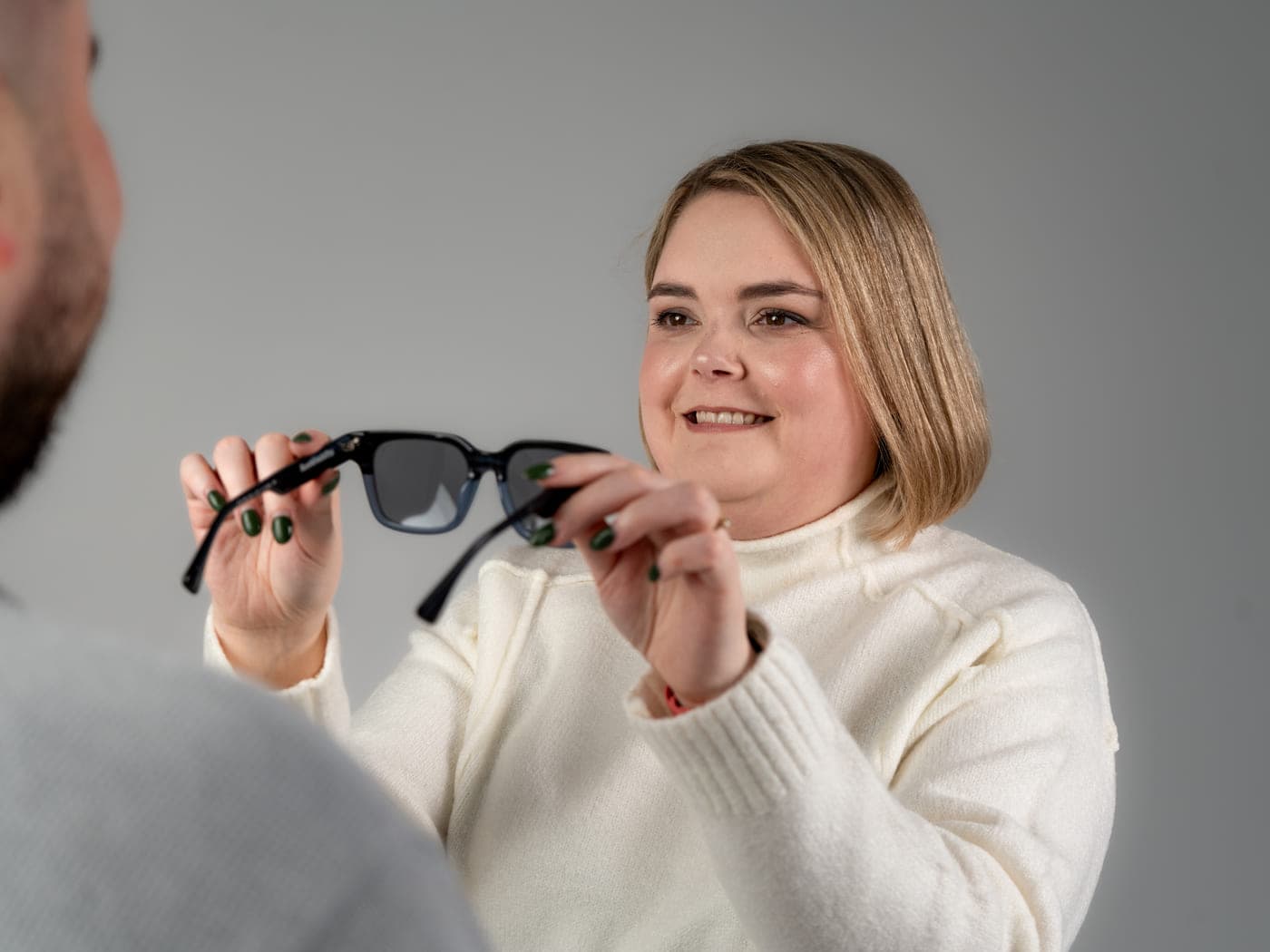
The full range travels: frames, sunglasses, lens samples and the measuring tools. You need a table and reasonable daylight — that is the whole setup.
- 03
Try, measure, discuss
I narrow the case to the handful that suit your face and your prescription, then measure properly: pupillary distance, fitting height, tilt and the distance from lens to eye.
- 04
Price it out loud
Frame plus lens, with the treatments named and costed, before anything is ordered. If I direct-bill your insurer, your portion is shown separately.
- 05
Fit and follow up
When the lenses arrive I come back, fit them and adjust the frame on your face. That visit is included, and so is every adjustment after it.
Frames
What travels in the case.
A working range rather than a wall of stock — enough to find the right one, not so much that choosing becomes a chore. Everything is chosen for how it fits and how it lasts.
- Materials
- Acetate for warmth and colour, titanium where weight matters, stainless for a thin profile, and rimless where you want the lens to do the talking.
- Shapes and widths
- Round, rectangular, square, panto, cat-eye and browline, in widths that suit a narrow face through to a wide one. Recommendations based on your prescription and lifestyle, never on a sales target.
- Children
- Any age, including toddlers and infants. A growing face changes the measurement — the bridge has to sit on a nose that has not finished forming — and a child will not tell you the glasses are wrong. They simply stop wearing them. Fitting at home helps: somewhere familiar, nobody waiting, and time to start over as often as it takes.
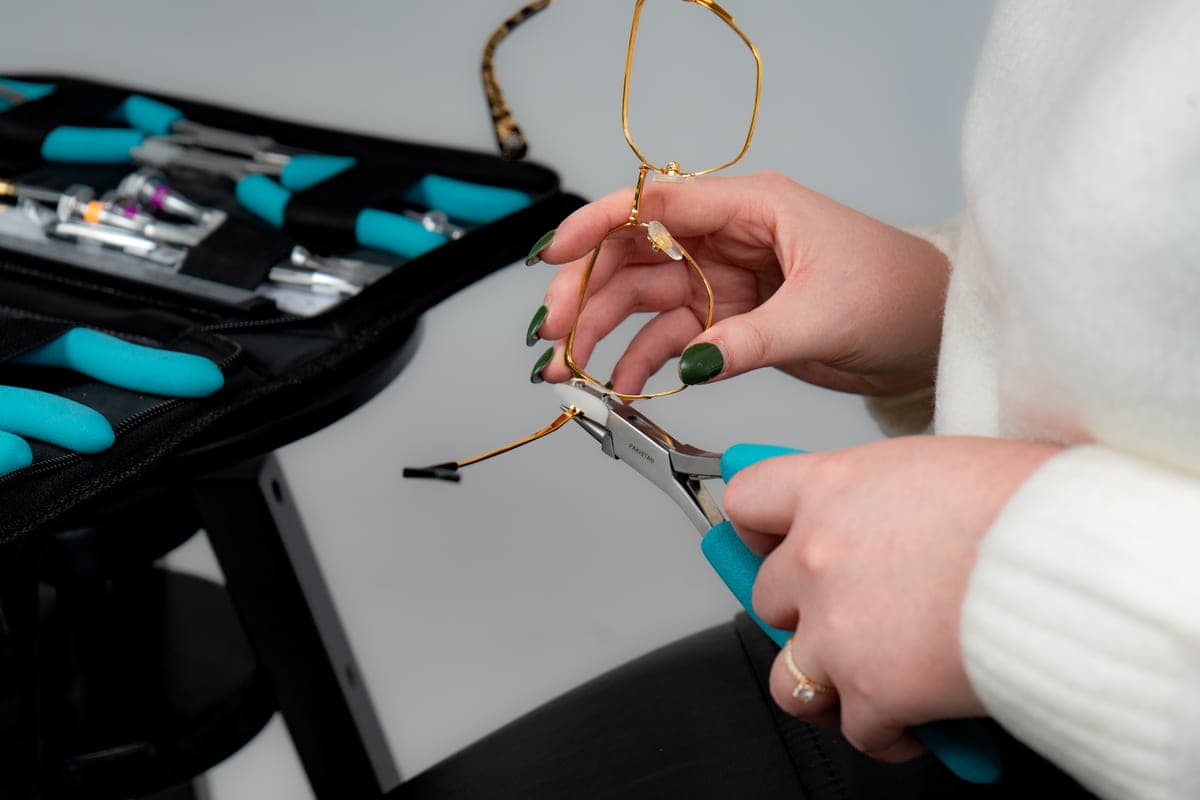
- Repairs and adjustments
- Bring a frame you already own and I will tell you honestly whether it can take a new lens. Adjustments on anything I fitted are included for as long as you have it, on my next run through your area.
Sunglasses
The same fitting, in the sun.
Tinted, polarized, or made to your prescription — the same measurements and the same file. Polarization is standard on most of what I carry, because a wet highway in July is exactly the glare it was invented for. If you spend your days outdoors, say so at the fitting: it changes what I recommend.
Lens types
What is available.
Single vision
One prescription across the whole lens. The default for distance or for reading, and the least expensive place to start.
Progressive
Distance, intermediate and reading in one lens with no visible line. Fit matters more here than in any other lens — the corridor has to sit where your eyes actually travel.
Bifocal
Two prescriptions with a visible line. Still the right answer for some people, and usually cheaper than a progressive.
Office / computer
Tuned for the metre in front of you rather than the road. If you spend seven hours at a screen, this is the second pair worth owning.
Treatments
Treatments and add-ons.
- Anti-reflective
- Cuts the reflections that make night driving hard and make your eyes disappear in photographs. I fit it on nearly everything.
- Blue filter
- Takes the edge off screen glare in the evening. I will tell you honestly what it does and does not do before you pay for it.
- Photochromic
- Darkens outdoors, clears indoors. Worth knowing that most types react to UV, so they stay clear behind a windshield.
- Polarized
- Kills glare off water, snow and wet asphalt. Standard on most of my sunglasses and available on any prescription tint.
- High-index (thinner)
- A denser material that keeps a strong prescription from looking like Coke-bottle lenses. The stronger your correction, the more this is worth.
- Scratch & smudge
- Included on every lens I order. It is not optional and it is not an upsell.
Why no catalogue
Because a frame is a measurement, not a picture.
Width, bridge, temple length and the height your pupil sits in the frame all decide whether a pair works. Two frames that look identical online can fit completely differently, and a strong prescription rules some of them out entirely. Choosing from photographs means guessing at all of it.
- Your prescription narrows the field before style does — some shapes cannot carry a strong correction without looking like Coke-bottle lenses.
- A frame two millimetres too low ruins a progressive lens, and no online size chart will catch that.
- What suits a face at rest is rarely what suits it in a product photograph.
Pricing
How it is priced.
A pair of glasses is a frame plus a lens, and the lens price depends on the prescription, the material and the treatments — a strong prescription in a thin material costs more than a mild one. That is why there are no prices on this site: a range would either mislead you or scare you off. I quote the exact figure at the fitting, before anything is ordered, and it goes on the invoice you receive afterwards.
If I direct-bill your insurer, the quote shows your portion separately. Learn more
Bring your prescription.
Or bring your current glasses — they tell me a great deal about what fits you. Booking is free and nothing is charged online.